NEWS & INSIGHTS
Mining Contribute to Reforestation?
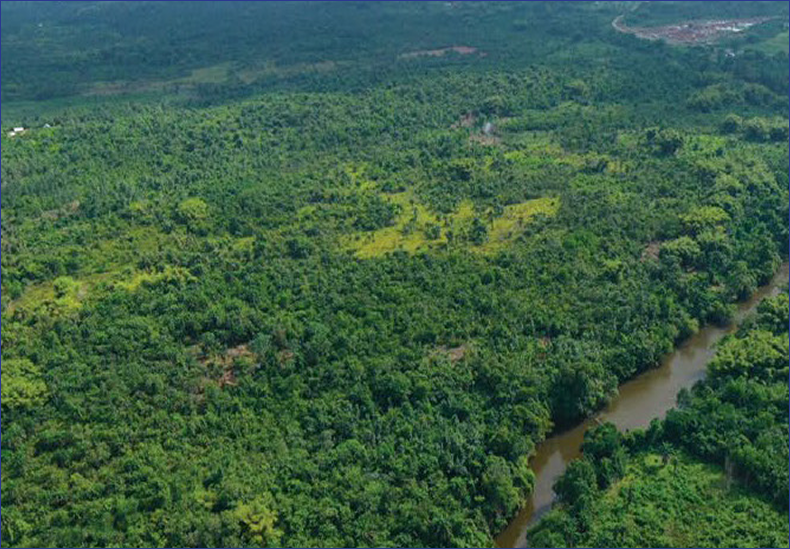
Case studies from regions like the Amazon, West Africa, and Southeast Asia highlight significant deforestation driven by gold, iron ore, and coal mining. However, a recent forest cover assessment conducted by Earthtime's GIS department has yielded a surprising result: forest cover has increased despite ongoing mining operations. A study, conducted by
Earthtime, utilized satellite imagery from 2008, 2012, and 2014/2015 to analyze changes within a mining area. Data revealed an increase in forest cover from 84.6% in 2008 to 86% in 2014/2015. This unexpected trend was particularly pronounced around the mine.
Several factors may be contributing to this phenomenon. Reduced slash-and-burn agriculture, likely linked to employment opportunities provided by the mining company, has allowed for natural regeneration of forests. Additionally, safety exclusion zones around the mine have limited human encroachment.
However, the study cautions against complacency. While the overall concession area saw a net gain in forest cover, the immediate vicinity of the mine did experience localized forest loss. Furthermore, ongoing pressures from agriculture, logging, and charcoal production, especially in community forests and protected areas, continue to pose significant threats to the region's forests.
Nevertheless, this finding raises important questions about the complex relationship between mining and forest cover change. While mining is generally associated with deforestation, this case suggests that the impact may not always be so straightforward. Understanding the conditions under which mining activities might contribute to forest recovery could inform more effective forest management strategies in the mining sector. By identifying key drivers of reforestation, policymakers and mining companies could adopt targeted measures that enhance environmental outcomes while supporting sustainable development.
- Are there conditions under which mining might contribute to forest recovery?
- Could mining companies, under specific policies or pressures, become drivers of reforestation in certain areas?
- If employment opportunities reduce slash-and-burn agriculture, could strategic job creation be used as a conservation tool?
- How do safety exclusion zones compare to formal protected areas in terms of their effectiveness in preventing deforestation?
- An increase in forest cover doesn’t necessarily mean ecological recovery—what about forest quality, biodiversity, and carbon storage?
- If mining companies unintentionally contribute to forest regrowth under certain conditions, could they be incentivized to do so more deliberately?
- Should mining companies be required to set aside more exclusion zones as a form of forest conservation?